


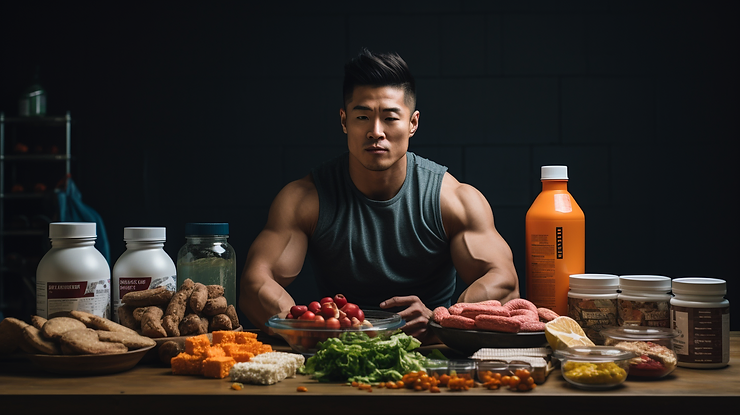
Your health depends on getting enough protein, which is a necessary nutrient. The muscles, skin, hair, and nails can all be built with it. However, consuming too much protein puts many people’s health at risk.
Since the average American diet already contains a sufficient amount of protein and because the body cannot store protein like it does fat cells, any extra protein is either excreted or is perceived as fat rather than muscle.

Therefore, you should only eat as much protein as necessary to support the health, function, and growth of your muscles. How much, though, is just right?
The majority of your energy comes from fats and carbohydrates, with protein only accounting for roughly 15% of your total energy consumption. In order to prevent your body from converting protein into energy and using it for exercise, you may need more carbohydrates than protein.
Aim for a protein intake of 70% from foods like meat, fish, eggs, or poultry. These foods’ complete proteins mix with other dietary sources’ incomplete proteins to form a complete protein. Therefore, your body utilizes all the protein you eat to its fullest potential.
If you are eating too much protein, you are likely eating more calories than you need to maintain your weight, which will manifest as a rise in your body fat levels. Additionally, as a result of the latest trendy high-protein diets, people aren’t eating enough carbohydrates, which causes the protein to be converted to glucose rather than being used to build muscle.

Not extra protein, but high-intensity strength training with the necessary amount of rest and recuperation time in between sessions, is what is required for muscle growth. It does not follow that you must consume 300 grams of protein per day just because that prominent bodybuilding celebrity you saw in the most recent magazine does. What he won’t tell you is that his muscle gains are the result of using steroids rather than changing his diet. Muscle growth is stimulated by high-intensity strength training rather than by diet.
In addition to being hazardous for your liver and kidneys, eating too much protein encourages vitamin and mineral deficiencies. It has also been connected to various types of cancer and osteoporosis.
One strategy to get rid of the requirement to consume huge amounts of protein is to gradually increase protein intake until a point of maximum efficiency is reached before significantly reducing it once more. As a result, the body is forced to overcompensate by improving the efficiency of protein absorption.
An example of a Protein Loading diet is found below.
1. Week One

Breakfast: Poached egg on toast, cereal with fruit and milk. Snack: Fruit and protein shake. Lunch: Chicken, potato, and vegetables. Fresh fruit salad. Snack: Nuts, fruit, and biscuits with cheese. Dinner: Fish any style, rice, vegetables, whole meal bread, and fruit salad.
2. Week Two

Breakfast: Two poached eggs on toast, cereal with fruit salad and milk. Snack: Nuts, fruit, protein shake. Lunch: Chicken with potatoes and vegetables (any style) Snack: Nuts, fruit, biscuits with cheese. Dinner: Roast Beef with vegetables, brown rice, whole meal bread.
3. Week Three

Breakfast: Three eggs any style on toast, cereal with fruit, and milk. Snack: Nuts, fruit, and protein shake. Lunch: Turkey with potatoes and vegetables, brown rice, whole meal bread. Snack: Nuts, fruit, protein shake. Dinner: ½ Chicken, potatoes, veggies, brown rice, whole meal bread. Before Bed: Protein shake.
4. Week Four

Breakfast: Four eggs any style on toast, cereal with fruit, and milk. Snack: Nuts, fruit, protein shake. Lunch: Spaghetti with meat sauce, potatoes, brown rice, whole meal bread. Snack: Nuts, fruit, protein shake. Dinner: Roast Pork, potatoes, brown rice, whole meal bread. Before Bed: Protein shake.
Move from the highest protein intake to the lowest after the fourth week of this protein-loading diet. Return to the week one menu in the fifth week, the week two menu in the sixth week, and so on.
With a combination of high intensity strength exercise and a protein loading diet that offers a mix of protein, fats, and carbohydrates, it is possible to gain muscle mass without consuming a lot of protein.